
Proper Ways To Cut PVC Sheet
By Jon, January 31st, 2024

When you are thinking of cutting polyvinyl chloride (PVC) sheets you may imagine complex machinery and workshop spaces filled with power tools. However, while advanced cutting methods certainly have their place, many people need to cut PVC for smaller projects. Whether your company deals in signage, displays, partitions, models, packaging, or construction materials, the ability to accurately cut PVC sheets in-house saves time and money.
The key is having the right simple tools for the job, knowing a few handy techniques, and understanding PVC's properties. In this guide, we will overview everything you need to know about how to safely and accurately cut PVC sheets.
Table of content
- Safety First When Cutting PVC
- What You'll Need to Cut PVC Sheets
- Cutting Thin PVC Sheets Under 5mm
- Cutting Thicker PVC Sheets Over 5mm
- Finish Cut Edges
Safety First When Cutting PVC
While PVC sheets themselves are generally safe to handle directly, proper precautions need to be taken when cutting them. Tiny shards or splinters can present hazards, and utility knives, saws, and other cutting implements are inherently dangerous.
Make sure to wear thick, cut-resistant gloves on the hand not directly guiding the cutting tool. Also be sure to use appropriate eye protection like safety glasses, goggles, or a face shield. Sturdy, closed-toe shoes should be worn as well in case tools are dropped.
Inspect your cutting instruments to ensure sharp blades so minimal cutting pressure is required. Dull blades can lead to slipping which endangers workers. Properly secure and support PVC sheets on a flat surface before cutting.
Keep other workers, equipment, and machine cables out of range during the cutting process. Measure twice before making any cuts since PVC can be difficult to rework compared to materials like wood. Make smooth, patient motions when scoring or sawing rather than forcing a cut quickly. This gives you better control and accuracy.
Safety protocols when physically cutting any material should not be overlooked. Following prudent precautions when cutting PVC sheets prevents workplace injuries from human mistakes.
What You'll Need to Cut PVC Sheets
Cutting PVC only requires simple, affordable tools. Here is what you will need:
- Utility Knives or Specialty PVC Cutters. For thin sheets under 5mm, a sharp standard utility or hobby knife is sufficient. If you cut PVC sheets quite often, then don’t forget to replace your blades from time to time to make the cut smoother.
- Straight Edges/Rulers. Essential for guiding score lines or saw cuts. Steel rulers up to 60cm provide the needed stability and straightness. Use cork backed rulers to avoid slipping and scratching work tables.
- Pens or Pencils. A must if you want to mark cut lines.
- Masking Tape. Apply along intended cut lines to prevent splintering on the backside and blemishing visible surfaces. Use narrow tape sizes like 1/4 inch for precision.
- Cutting Mat. Good thing to have if you want to prevent damaging your work tables or machine beds during cutting.
Cutting Thin PVC Sheets Under 5mm
For PVC sheets less than 5mm thickness, basic manual tools offer plenty of cutting capability. The keys are methodical scoring and layering tape. While it is possible to cut through in one pass, a multi-pass approach prevents cracks or tears.
Manual Cutting Under 5mm
When armed only with a sharp blade and straight edge, first measure and mark cut lines on the masking tape surface. Ensure your utility knife blade fully exposes the tip for optimal scoring capability.
Then, hold the ruler edge flush against the knife bottom to guide the initial score pass. Use enough cuts to lightly score the entire cut line, repositioning the straight edge as needed. Apply firm downward pressure when scoring versus slicing sideways to prevent wandering.
Once scored, move a few millimetres over on the PVC sheet and repeat the scoring process 2-3 more times to deepen the cut gradually. Finally, snap the sheet cleanly by hand along the cut line, utilizing the table edge for leverage if needed. The PVC should separate cleanly with some light sanding to polish rough edges after.
Water Jet Cutting PVC
While simple sheets under 5mm shouldn't require complex machinery, water jet cutting services provide extreme precision for high-quantity production. Pressurized water jet streams easily slice through PVC up to an inch thick with no heat damage while also enabling intricate curved or angled cuts.
Computer-guided water jet cutters make quick work of large batch PVC fabrication once templates and programming are dialed in. The high costs of water jet equipment and minimal material waste make manual methods preferential for smaller DIY operations. But large manufacturers can benefit from water jet cutting PVC efficiency at scale.
Cutting Thicker PVC Sheets Over 5mm
Once PVC sheets surpass 5mm in thickness, manual scoring becomes impractical. Power saws become necessary for precise cuts through material over 10mm thick. Proper blade choice and setup can prevent binding or chewing.
Circular Saw
A circular saw outfitted with a fine-toothed hollow ground HSS blade works well for straight cuts in PVC stock up to 20mm thickness. Ensure the saw base plate sits completely flush with the sheet bottom along a straight edge cutting guide for stability. Make slow, steady passes to prevent melting rather than forcing cuts aggressively. Lubricating blades minimally with glycerin can ease friction in thick cuts.
Jigsaw
For cutting shapes and radii in PVC sheets up to 30mm thickness, a jigsaw allows tight curve manoeuvrability other saws can’t match. Fit jigsaws with rigid pattern blades featuring very fine teeth optimized for plastics rather than wood or metal. Apply smooth, gradual pressure through curves to prevent blade deflection off track. Pilot starting holes help jigsaws enter cleanly at interior cut start points where applicable.
For heavy-duty applications demanding thickness over 30mm or cuts over 4 feet, a fast-cutting vertical panel saw surpasses table saws for control, safety, and accuracy. But old-fashioned handsaws also still cut thicker flat PVC effectively in a pinch when powered options aren’t available. The key lies using in the proper blades and prudent cutting practices for the thickness at hand.
Finish Cut Edges
After cutting, PVC sheet edges tend to be rough and uneven with occasional splintering on the backside. Taking a quick finish pass refined the final professional appearance. Common edge finishing options include:
Sanding — For the smoothest results, use progressive grit sandpaper starting around 100 grain and moving up to 600+ depending on the desired polish. Can be performed by hand or using power disk sanders for fast localized edge work. Avoid heat buildup from excessive power sanding.
Routing/Shaping — Using a compact trim or laminate router outfitted with a flush cutting bit side along the cut edge trims away ragged remnants evenly. Works well on thicker sheets. Requires safety precautions and router operation skills.
Deburring Tools — Handheld deburring tools quickly scrape away extruding edge slivers or burs with their angled blades in efficient singular swipes. Offer simpler manual finishing versus power sanders for end cuts.
Each method adds only a few additional minutes while drastically elevating the final cut quality. Smooth, even PVC edges improve aesthetics, safety for handling, and proper mating of joined sheet pieces. Refine cutting work with a purposeful edge finishing pass.
Share Story
How to measure guide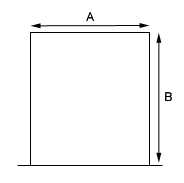
- Measure the width of opening A
- Measure the height of opening B
- Check specifications for PVC/Overlap using “recommended use” in PVC specification table
- Specify whether the curtain will be for face or under lintel fixing.
- If in doubt, please check with us